

Anxious Attachment: Causes, Signs & Healing
- Mr. Sam Lam, MSSC, RCC
- Jun 1
- 4 min read

Updated: Jun 10

What Is Anxious Attachment?
Anxious attachment is one of the four attachment styles described in attachment theory. Attachment styles refer to the ways individuals learn to connect with others based on their early experiences with primary caregivers. When children have experiences that emotional support feels inconsistent, unpredictable, or unavailable, they may develop a heightened sensitivity to connection, reassurance, the possibility of rejection, and a perceived sense of abandonment.

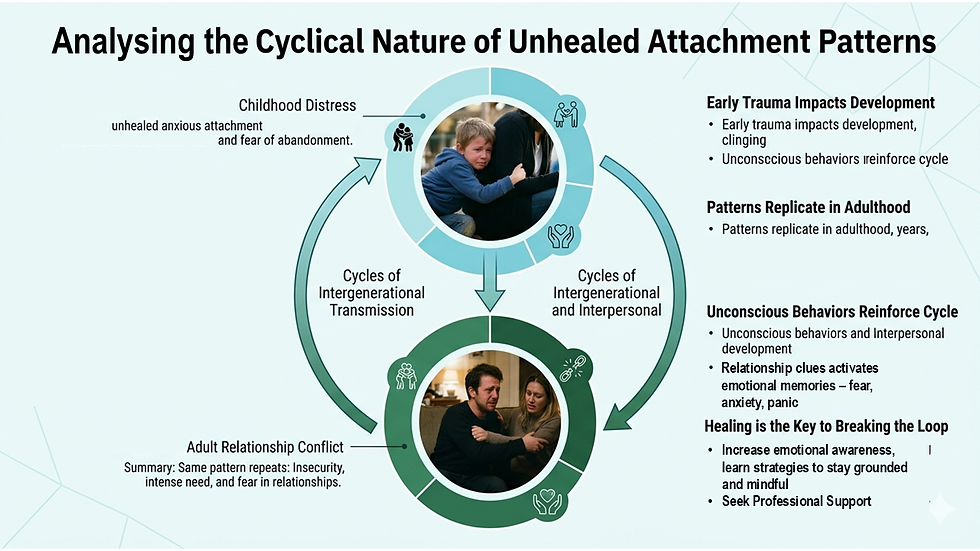
Without healing, the relationship pattern repeats itself unconsciously. Individuals with anxious attachment finally grow up as adults, but the same style of attachment remains existed. It involes a strong desire for closeness alongside persistent worries about being abandoned, forgotten, or unloved. Individuals with anxious attachment may find themselves overthinking interactions, seeking reassurance, or feeling distressed when a friend or a partner appears distant, even thought the connection stays still. While these reactions can feel overwhelming, they often reflect a deep longing for safety, connection, and emotional security rather than a personal weakness or flaw.
Signs of Anxious Attachment
1. Frequently Seeking Reassurance
Individuals with anxious attachment may regularly ask whether their friend or partner is upset, whether the relationship is okay, or whether they are loved. Behaviours may include repeatedly checking text messages, feeling distressed when a friend or a partner does not respond immediately, and seeking frequent reassurance about their whereabouts.
While seeking reassurance is a normal part of relationships, anxious attachment can make reassurance feel temporarily comforting but never fully enough in a long run.
2. Overthinking Tendency
A delayed text message, a brief response of "okay", or a change in tone may trigger significant worry. We though we had done something wrong and "ruined" the connection. We might spend hours wondering what a message means or assume that a friend's or a partner's silence reflects a problem in the relationship.

3. Anticipation of Abandonment / Rejection

Individuals with anxious attachment often carry a heightened fear of being left behind or rejected in casual communication with others. Even minor disagreements or temporary distance may feel threatening and activate strong emotional reactions.
4. Difficulty in Tolerating Uncertainty
It's natural that we, as human beings, prefer certainty in relationships, but anxious attachment can make us feel that we are responsible for the uncertainties in relationships. We experience increased anxiety and a strong urge to seek immediate answers.
5. People Pleasing

To protect relationships, being compliant to avoid disagreement becomes a survival coping strategy to address fear of being rejected and left out. When relationship anxiety is intense, we focus on maintaining connection with neglecting our own needs and boundaries, in order to prioritize the relationship over personal needs.
6. Becoming Highly Sensitive to Emotional Distance
It is common to hear someone say, "I just want to play video games with my friends," "I just want to go shopping with my besties."

Such a straightforward statement often leads to an inevitable heated discussion.
A partner needing space, spending time with friends, or being preoccupied with work may be interpreted as a sign of rejection. Although the distance may be temporary and unrelated to the relationship, it can feel deeply unsettling for someone with an anxious attachment style.
How Anxious Attachment Affects Relationships
Increased Relationship Stress
When anxiety drives frequent reassurance-seeking or worry in relationships, both individuals may experience increased stress. One person may feel constantly uncertain, while the other may feel pressured to provide reassurance repeatedly. A "chasing-avoiding" attachment pattern may develop.

Communication Difficulties
Strong emotions can sometimes make it difficult to communicate needs clearly and directly. Instead of expressing vulnerability openly, we may become reactive, withdraw, or seek reassurance in ways that create misunderstanding.
A Cycle of Pursuing and Distancing
Anxious attachment can contribute to a pattern where one partner seeks greater closeness while the other pulls away. As distance increases, anxiety often intensifies, which can further reinforce the cycle and create emotional disconnection.

Reduced Self-Confidence
Over time, relationship anxiety can affect how we view ourselves. Constantly questioning our worth, attractiveness, or importance within a relationship can contribute to lower self-esteem and increased emotional distress.
Can we make changes in our attachment styles?
Quick Answer - YES! Attachment styles change once we recognize the patterns and start to work on ourselves.
Notice and Name What Is Happening
The first step toward change is to increase the sense of control with an effort of the individual oneself, by recognizing attachment-related emotions when they arise. Through counselling, we can learn to identify moments when fear, uncertainty, or anxiety are influencing how we interpret a situation.
Become Curious About the Underlying Feelings
According to Accelerated Experiential Dynamic Psychotherapy (AEDP), difficult reactions often protect deeper emotions and unmet needs. Instead of judging ourselves for feeling anxious, we can begin exploring what our emotions may be trying to communicate about our need for connection, safety, and support.

Develop Self-Compassion

Many individuals with anxious attachment criticize themselves for being "too sensitive" or "too needy." Counselling can help us develop a more compassionate understanding of our experiences and recognize that attachment patterns often develop as adaptive responses to earlier life experiences.
Strengthen Emotional Regulation Skills
Learning to soothe ourselves during moments of uncertainty can reduce the urge to seek immediate reassurance. Techniques such as mindfulness, grounding, emotional awareness, and reflective self-compassion can help create a greater sense of stability and confidence.

Build Secure Relationships with Ourselves and Others
Security often grows through repeated experiences of safety, authenticity, and connection. Through counselling and healthy relationships, we can learn to communicate our needs directly, establish healthy boundaries, and develop greater trust in ourselves and others.
How Counselling Can Help
Anxious attachment can create significant challenges in relationships, but these patterns are not permanent. Through adult counselling, relationship counselling, and anxiety counselling, individuals can gain insight into their attachment patterns, develop healthier coping strategies, improve emotional regulation, and build more secure relationships. Counselling provides a supportive and non-judgmental space to explore these experiences, strengthen self-awareness, and move toward greater confidence, connection, and emotional well-being. If relationship anxiety is affecting daily life or relationships, reaching out for professional counselling support can be an important step toward meaningful and lasting change.


Comments