

Play Therapy in Burnaby: Helping Children Express What Words Cannot

What Is Play Therapy?
When we experience emotional pain, we often talk. We describe our worries, tell stories about what happened, and try to make sense of our experiences through conversation. We quite often realize that children don't communicate through talking. Even though we encourage our children to talk, and we teach them so much vocabulary, they may just stay silent, head down and stare at the ground, appeared to be sad.
Children, communicate differently. Their language is not primarily words: it is play.
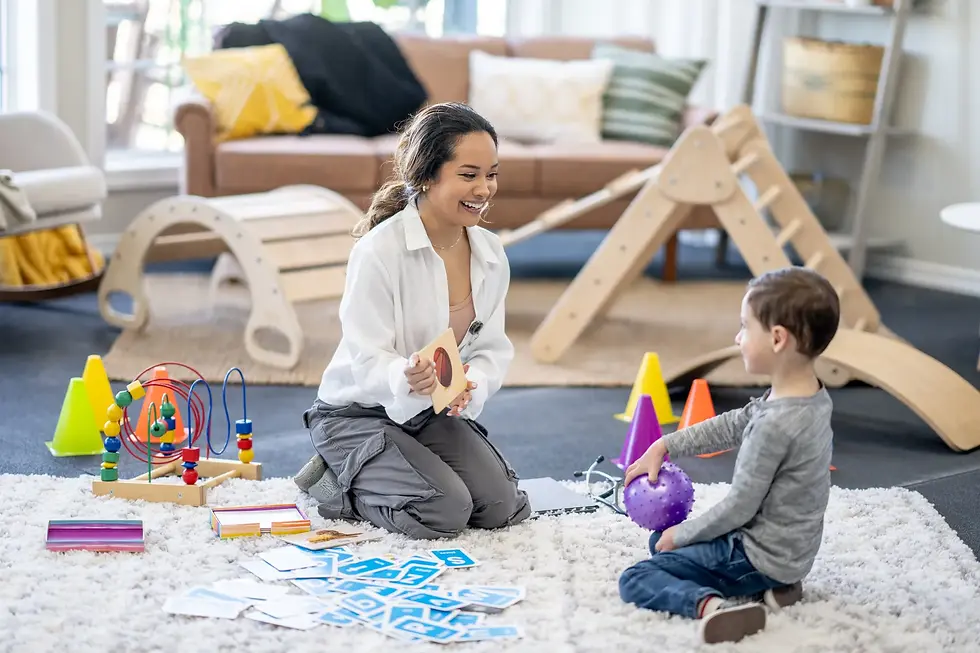
Play therapy is a developmentally appropriate form of counselling that helps children express thoughts, emotions, and experiences through play rather than relying solely on verbal communication. In a carefully prepared therapeutic playroom, toys become more than objects for entertainment.
Toys are their words, and Play is their ways of communication.
They become a child's language for communicating feelings that may be difficult, confusing, or even impossible to explain.
Developmental psychology has consistently shown that young children are still developing the cognitive and language abilities needed to fully understand and describe their inner world. Their "rational brain" are not fully developed yet, but instead, their emotional brains are fully activated all the time. Children sense the world naturally through emotions and body. A child may know that something feels "wrong," but may not yet have the words to explain sadness, anxiety, loneliness, anger, or fear. Instead, these emotions often appear through behaviour, imagination, and play.
"But my child is just playing, why does it work for therapy, what about we educate them instead?" This is why Play Therapy in Burnaby is much more than simply playing games with a child. Every drawing, story, sand tray scene, puppet conversation, or pretend adventure can offer valuable insight into how a child experiences their world. Through play, children are not avoiding difficult emotions—they are often expressing them in the way that feels most natural to them.
Here, I practise Child-Centered Play Therapy, an evidence-informed approach that recognizes each child's natural capacity for growth when they experience a relationship built on acceptance, emotional safety, and genuine curiosity. Rather than directing every activity or focusing immediately on changing behaviours, Child-Centered Play Therapy follows the child's lead. Within clear therapeutic boundaries, children are given the freedom to explore, create, imagine, and express themselves at their own pace.

Have you thought about what it would be like if there were a person who pays 100% attention to you, without correcting and judging you to do "the right" things, while this person gives you the sense of freedom, autonomy, and trust - believing that you can do what you want to do - what would you feel?
This approach is grounded in a simple yet powerful belief: before children can develop new ways of coping, they first need an experience of being understood.
As a Registered Clinical Counsellor (RCC) providing Child Counselling in Burnaby, I truly believe children's behaviours often make sense when we understand the emotions and experiences beneath them. A tantrum, emotional withdrawal, perfectionism, aggression, or constant worry may all be meaningful attempts to communicate something that words alone cannot yet express.
Play therapy creates a space where children do not have to perform, explain themselves perfectly, or find the "right" words. Instead, they are met with patience, curiosity, and a therapeutic relationship that allows their authentic emotional world to emerge naturally through play.3
Why Children Use Play Instead of Words
Adults often assume that talking is the most effective way to solve problems. When a friend is struggling, we invite them for coffee and ask, "Do you want to talk about it?" Conversation is one of the primary ways adults understand themselves and each other.
Children are different.
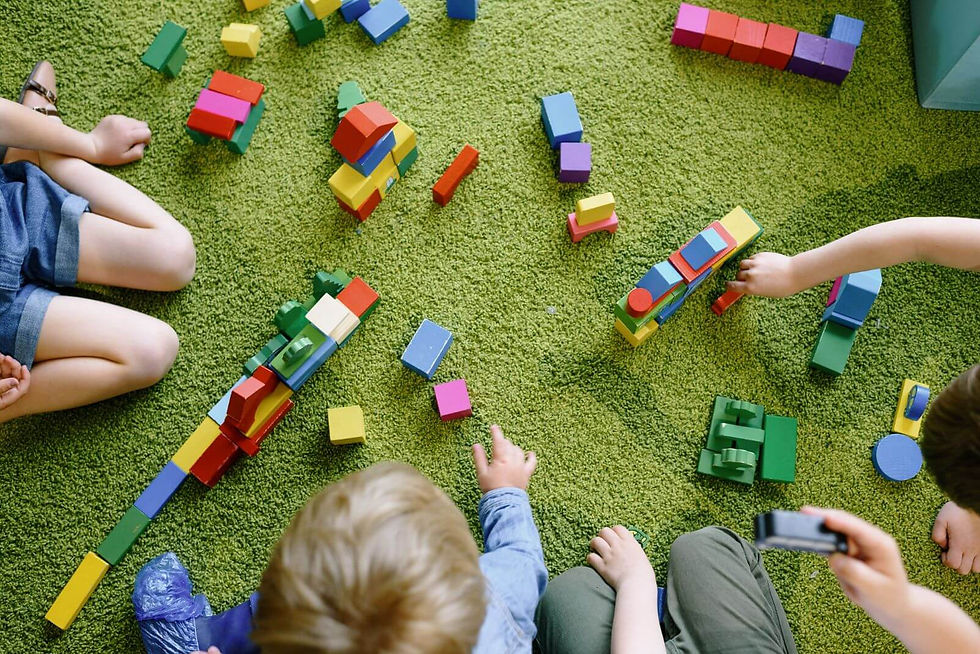
Rather than telling stories with words, children tell stories through play.
A child who has experienced a frightening event may repeatedly rescue toy animals from danger. A child struggling with school anxiety may build a classroom in the sand tray over and over again. Another child may create elaborate battles between superheroes, or quietly care for a baby doll that seems lonely and afraid.
To an adult, these may simply look like games.
To a play therapist, they are meaningful expressions of a child's inner world.
Play allows children to explore emotions from a safe distance. Through imagination, they can become the brave knight, the frightened puppy, the caring doctor, or the powerful superhero. They can replay experiences, experiment with different endings, and express feelings that might otherwise remain hidden.
Importantly, children are not "acting out" random ideas. Their play often reflects what they are trying to understand, master, or communicate.
This is one of the reasons Play Therapy in Burnaby can be so effective. Rather than asking children to communicate in an adult language, therapy meets them in their own.
Think about how adults process difficult experiences. We often revisit memories by talking about them with someone we trust. We tell the story repeatedly, each time making a little more sense of what happened.
Children do something remarkably similar—but instead of words, they use play.
They repeat stories.
They repeat themes.
They repeat relationships.
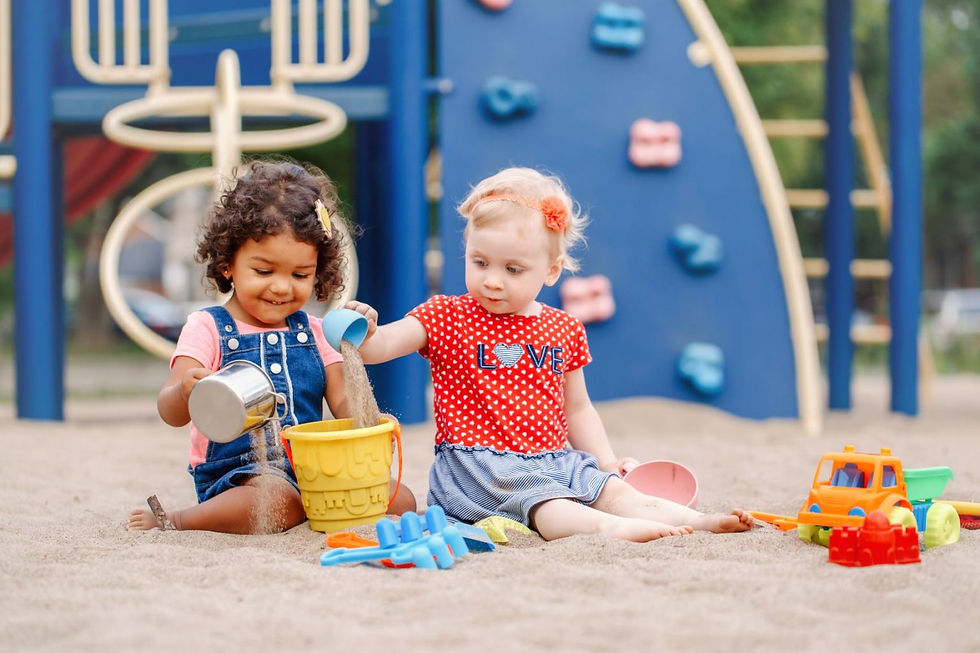
A child who consistently makes sure every toy is "safe" may be expressing a deep need for security. A child who always insists on winning every game may not simply be competitive; they may be exploring ideas about control, success, belonging, or self-worth. Another child may quietly invite the therapist to join their imaginary world, discovering what it feels like when an adult is willing to stay present without criticism, pressure, or expectation.
Sometimes, the healing is not found in the toys themselves.
It is found in the relationship that unfolds through play.
Children begin to discover that they can express anger without losing connection. They can make mistakes without being rejected. They can show fear without being judged. They can simply be themselves while another person remains emotionally present with them.
In many ways, this experience mirrors what healthy relationships offer throughout life: the freedom to be fully ourselves in the presence of another human being.
As a Registered Clinical Counsellor providing Child Counselling in Burnaby, I see play not as a technique to change children, but as an invitation to understand them more deeply. When we become curious about the meaning behind a child's play, behaviours that once felt confusing often begin to make sense.
Rather than asking, "How do we stop this behaviour?"
We begin asking,
"What is the child trying to tell us?"
"What are the meanings undernearth the play?"
That shift—from correcting to understanding—is often where meaningful change begins.
How Play Therapy Works
Many parents wonder what actually happens once they bring their child to therapy. Will the therapist ask lots of questions? Will their child be expected to sit and talk? Will there be activities with specific goals?
The answer is often quite different from what parents imagine.

Play therapy is carefully structured, but it does not feel rigid to the child. Instead, sessions are designed to create a relationship where children feel emotionally safe enough to express themselves naturally.
The process usually begins with an initial parent consultation. This first meeting provides an opportunity to understand your concerns, your child's strengths, developmental history, family relationships, and the challenges that brought you to seek Play Therapy in Burnaby. Rather than focusing only on behaviours, we also explore the context surrounding them. Understanding a child's world helps guide the therapeutic process.
From there, the first play therapy sessions focus on building trust.
Children are introduced to the therapy room, where they are invited to explore a carefully selected collection of toys and creative materials. These are not random toys. Each item has been chosen because it supports emotional expression, imagination, problem-solving, or symbolic communication.
You might find dollhouses, miniature family figures, puppets, animals, costumes, blocks, art materials, sensory items, and a sand tray with miniature objects. Each offers children another way to communicate experiences that words may not yet capture.
The sand tray is one of the most unique tools in play therapy. By arranging miniature figures within the sand, children often create scenes that reflect relationships, fears, hopes, memories, or internal conflicts. Without needing to explain themselves directly, they can explore complicated emotional experiences in a way that feels manageable and safe.
Art also becomes an important form of communication. Some children draw carefully planned pictures, while others paint freely or sculpt with clay. The goal is not to create beautiful artwork, but to provide another language through which emotions can emerge.
Throughout the session, the therapeutic relationship remains at the centre of everything.
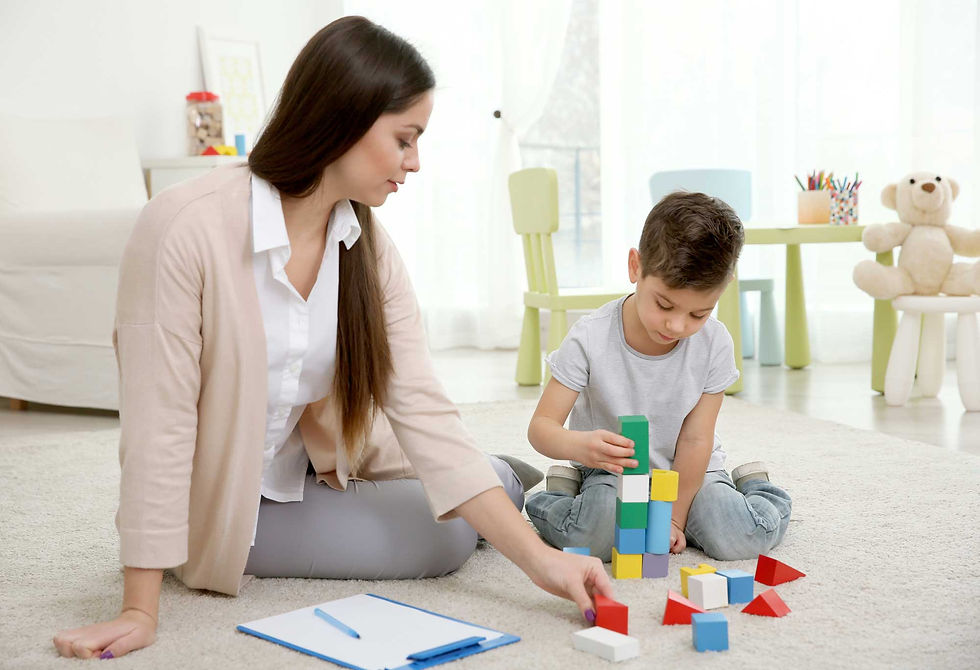
Rather than directing every activity, the therapist observes, follows the child's lead, reflects emotions, notices patterns, and responds with genuine curiosity. Children gradually experience what it feels like to be accepted without needing to perform, achieve, or find the "right" answer.
As therapy continues, symbolic play often develops naturally. A child may replay similar themes across many sessions before introducing new characters, different endings, or fresh ways of responding. These changes are rarely forced. Instead, they often emerge as children become more emotionally secure and begin exploring new possibilities within the safety of the therapeutic relationship.
Over time, many children also strengthen their ability to recognize emotions, regulate overwhelming feelings, solve problems, and build healthier relationships. Importantly, these changes are not simply taught as skills. They often grow from repeatedly experiencing an accepting relationship in which their emotions are welcomed, understood, and held with care.
Play therapy is not about asking children to become someone different.
It is about creating the conditions where they feel safe enough to discover more of who they already are.

Comments